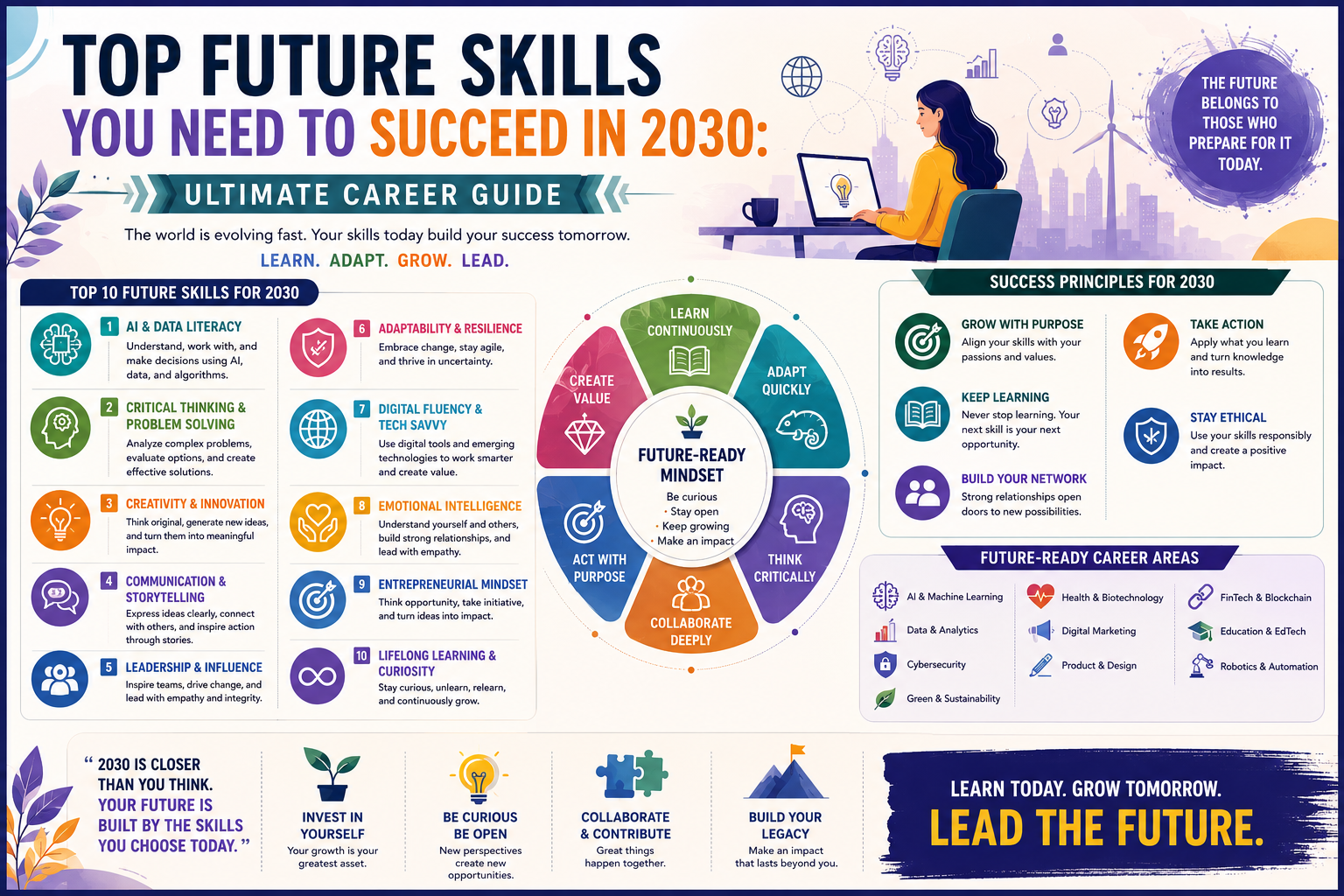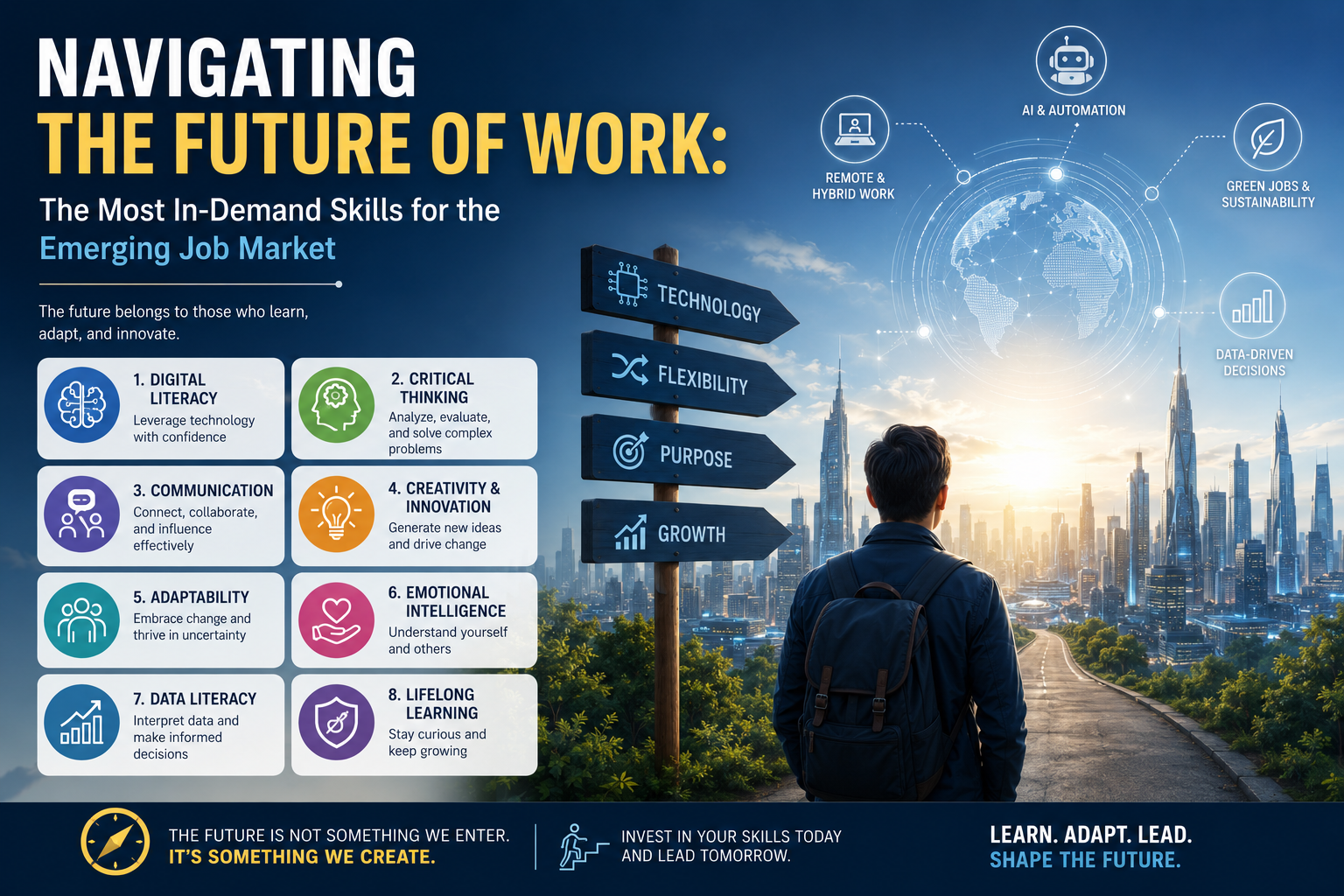
The global employment landscape is undergoing a structural transformation unlike anything seen since the dawn of the Industrial Revolution. Driven by exponential breakthroughs in generative artificial intelligence, quantum computing, cloud architecture, and automation, the definition of professional competence is being rewritten in real-time. According to global macroeconomic indicators, nearly half of an individual’s core skills are projected to disrupt or decay within a five-year window, necessitating a profound commitment to continuous learning and strategic upskilling.
For professionals aiming to secure high-yield career paths, understanding this shifting matrix is no longer elective; it is a baseline survival strategy. The modern workforce is transitioning away from rigid, static job descriptions toward dynamically fluid, skills-based architectures. This comprehensive guide dissects the macro-trends dictating human talent markets, mapping out the analytical technical faculties and enduring cognitive attributes required to achieve career resilience over the next decade.
1. Technological Fluency & Artificial Intelligence Integration
The ubiquity of automation has transitioned software engineering and basic computational awareness from specialized disciplines into ubiquitous core literacies. However, the next paradigm is not merely about writing code; it centers on systems-level co-piloting alongside automated intelligence networks.
AI Prompt Engineering & Generative Systems Management
As large language models (LLMs) and multi-modal creative networks integrate into enterprise software frameworks, the ability to optimally orchestrate these frameworks is critical. True prompt engineering has evolved past basic natural language commands into systematic contextual structuring, logical orchestration, and fine-tuning output configurations. Professionals who master the dialogue between corporate operational needs and machine intelligence will drastically outperform peers by optimizing baseline output efficiencies by several orders of magnitude.
Advanced Data Analytical Capabilities & Interpretation
The contemporary enterprise operates inside a deluge of multi-structured data streams. Consequently, businesses do not face a shortage of metrics; they face a critical deficit of execution-focused interpretation. Deep literacy in data curation, relational visualization, and analytical forecasting tools enables a professional to parse complex business intelligence patterns and convert raw metadata sets into clear, defensible corporate strategies.
2. Advanced Technical Faculties & Infrastructure Engineering
While software manages operational logistics, the structural architecture underpinning digital societies requires highly specialized professionals capable of configuring, expanding, and safeguarding infrastructure networks.
Cybersecurity Architecture & Zero-Trust Verification
As critical utilities, personal communication records, and financial frameworks migrate entirely into decentralized cloud infrastructures, the systemic risk of sophisticated state-sponsored and autonomous cyber threats scales exponentially. Organizations are radically shifting away from passive perimeter security models toward proactive, complex “Zero-Trust” operational architectures. This paradigm shift ensures that security engineers proficient in identity federation, continuous digital validation, cryptanalysis, and algorithmic vulnerability patching command unprecedented premium value in human resource pipelines.
Cloud Infrastructure & Decentralized Compute Networks
The era of single-tenant localized servers is completely obsolete. The contemporary enterprise relies on hybrid cloud environments distributed across hyper-scale providers. Specialized engineering mastery within multi-cloud frameworks, automated continuous delivery systems (DevOps/DevSecOps), and serverless architecture provisioning ensures microservices operate seamlessly across global zones, keeping underlying infrastructure efficient, redundant, and highly cost-optimized.
3. Elite Cognitive Attributes & Critical Problem Solving
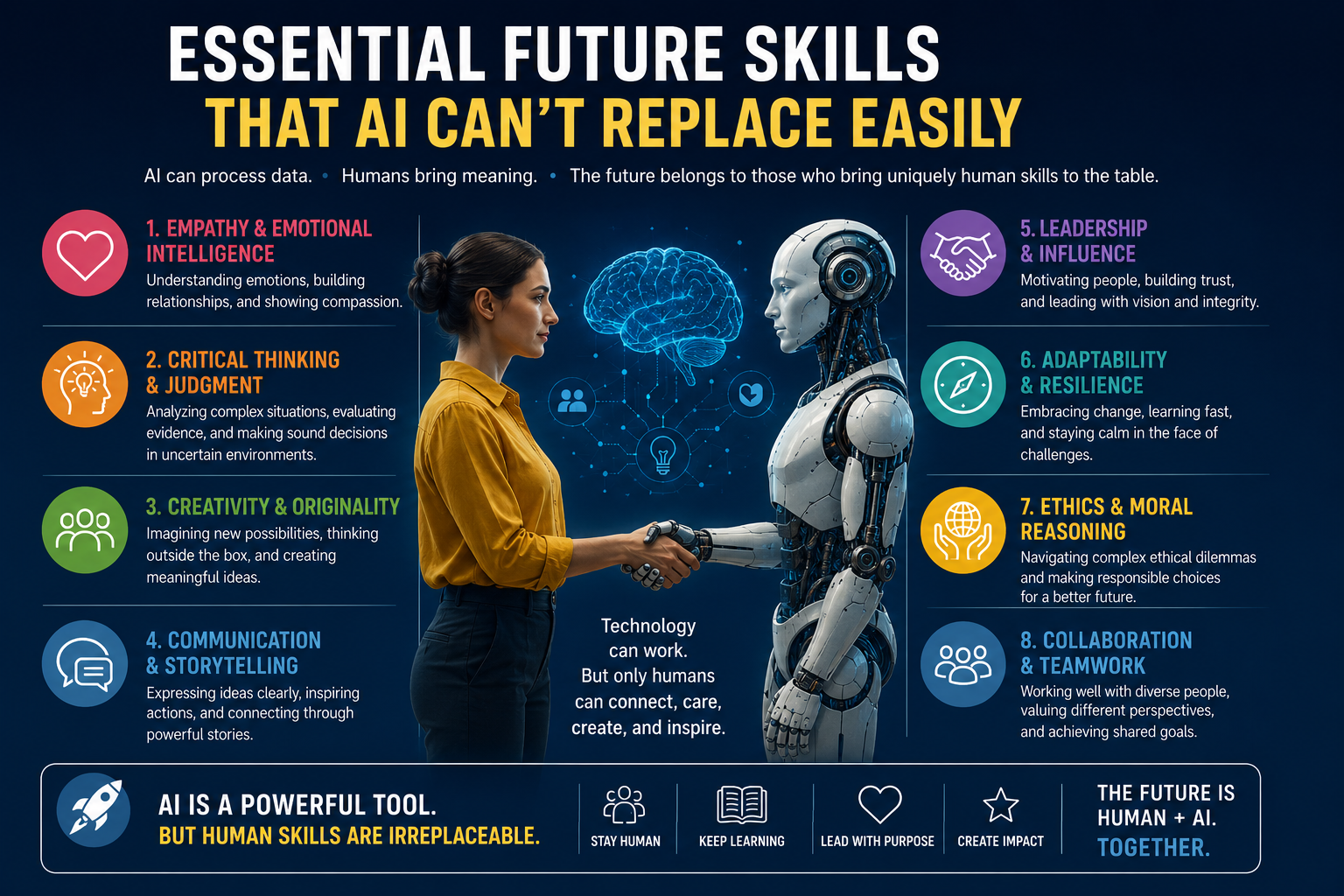
Paradoxically, as machines automate technical execution, human cognitive superiority shines brightest in non-linear, ambiguous scenario mapping. Traits that rely heavily on nuance, ethics, and multi-layered perspective remain firmly anchored within the human domain.
Complex Interdisciplinary Synthesis
Automated algorithms excel within well-defined, closed-loop semantic environments. However, they systematically falter when confronted with multi-variable systemic anomalies that cross traditional domains. Humans who possess strong interdisciplinary synthesis can bridge separate domains—such as reconciling carbon-neutral logistical mandates with macroeconomic supply chain shocks while managing complex legal structures. This structural intuition remains incredibly difficult for autonomous architectures to replicate.
Analytical Judgment & First-Principles Strategic Design
Strategic success requires challenging outdated operational paradigms and making critical decisions based on incomplete or conflicting information. First-principles analytical design involves breaking down complex institutional problems into foundational truths and assembling novel solutions from the ground up. This cognitive discipline is essential for driving structural innovation across competitive market landscapes where no playbook exists.
4. Interpersonal Orchestration, Leadership & Cultivating Psychological Capital
Organizations are ultimately human networks. The capacity to inspire, coordinate, and foster psychological safety across distributed workforce ecosystems is highly valued by global enterprise leaders.
High EQ, Adaptive Communication & Cross-Cultural Alignment
The modern workplace spans multiple generations and geographic boundaries, operating seamlessly across asynchronous channels. In this environment, hyper-refined emotional intelligence (EQ) serves as a vital operational lubricant. True communicative adaptability requires reading unspoken team dynamics, resolving structural conflicts neutrally, and tailoring nuanced strategic messages to align diverse global stakeholders around shared goals.
Distributed Team Management & Empowering Leadership
The command-and-control hierarchical structure of early corporate leadership is poorly suited for the current remote-first landscape. Elite contemporary leaders focus on decentralized enablement. They build high-performing teams by establishing explicit objectives, providing substantial structural autonomy, and actively cultivating professional psychological safety. This management style is critical for driving employee retention and fostering innovative thinking in remote or hybrid corporate environments.
5. Personal Agility & Perpetual Lifelong Upskilling
The defining trait of the future worker is the acceptance that one’s formal education is not a static endpoint, but a foundational stepping stone that requires regular, active updates.
Cognitive Flexibility & Meta-Learning Resilience
Meta-learning—the structured science of analyzing how you acquire, retain, and apply new knowledge—is the foundational skill that amplifies all other professional capabilities. As legacy industries adapt to shifting market realities, professionals must maintain the mental agility required to unlearn obsolete legacy habits and swiftly absorb entirely new technical paradigms without experiencing cognitive burnout.
Building Your Professional Moat
The future job market will not be defined by a shortage of viable opportunities, but by a widening mismatch between outdated skills and the demands of high-growth industries. Securing your professional future requires a dual-track strategy: continuously sharpening your high-leverage technical capabilities while deeply developing your uniquely human cognitive and interpersonal strengths. By treating your career as an evolving software product that requires regular updates, you can transform technological disruption into a powerful catalyst for long-term career growth.
Frequently Asked Questions (FAQs)
Q1: Will artificial intelligence completely replace standard software engineering jobs over the next decade?
A1: AI will not entirely eliminate software engineers; instead, it will displace engineers who refuse to integrate AI into their workflows. Future developers will operate as high-level architects, using generative platforms to write routine code while focusing their energy on system design, cybersecurity, and deep integration logistics.
Q2: How can professionals in non-technical fields stay competitive without learning advanced coding?
A2: Non-technical professionals can build a strong competitive advantage by focusing on elite human-centric skills. Deepening your emotional intelligence, mastering cross-functional team leadership, and sharpening your complex data interpretation skills allow you to drive immense corporate value without needing to write code.
Q3: What specific strategies can I use to build a habit of lifelong continuous learning?
A3: Treat upskilling like a necessary daily routine. Set aside 30 to 45 minutes every morning for micro-certifications, specialized technical reading, or guided learning platforms. Focus on building “T-shaped” skills—developing broad foundational knowledge across multiple industries while anchoring your career with deep expertise in one specific niche.
Q4: Are traditional multi-year degree programs losing their value in the modern corporate market?
A4: Traditional degrees still provide valuable proof of critical thinking and foundational discipline, but their status as absolute career gatekeepers is declining. Leading global enterprises increasingly prioritize proven skills, diverse portfolios, and verifiable continuous certifications over specific university credentials.
Q5: Which specific industries are expected to see the fastest overall growth in employment opportunities?
A5: The highest workforce expansion is concentrated in artificial intelligence infrastructure, renewable energy engineering, cybersecurity operations, healthcare automation, and specialized corporate compliance management systems.