Have you ever wondered why some students always seem to get top grades while still having time for friends, hobbies, and sleep? It is easy to assume they are just born geniuses. However, if you look closer, you will find that academic excellence has very little to do with luck or raw talent. Instead, it is all about routine.
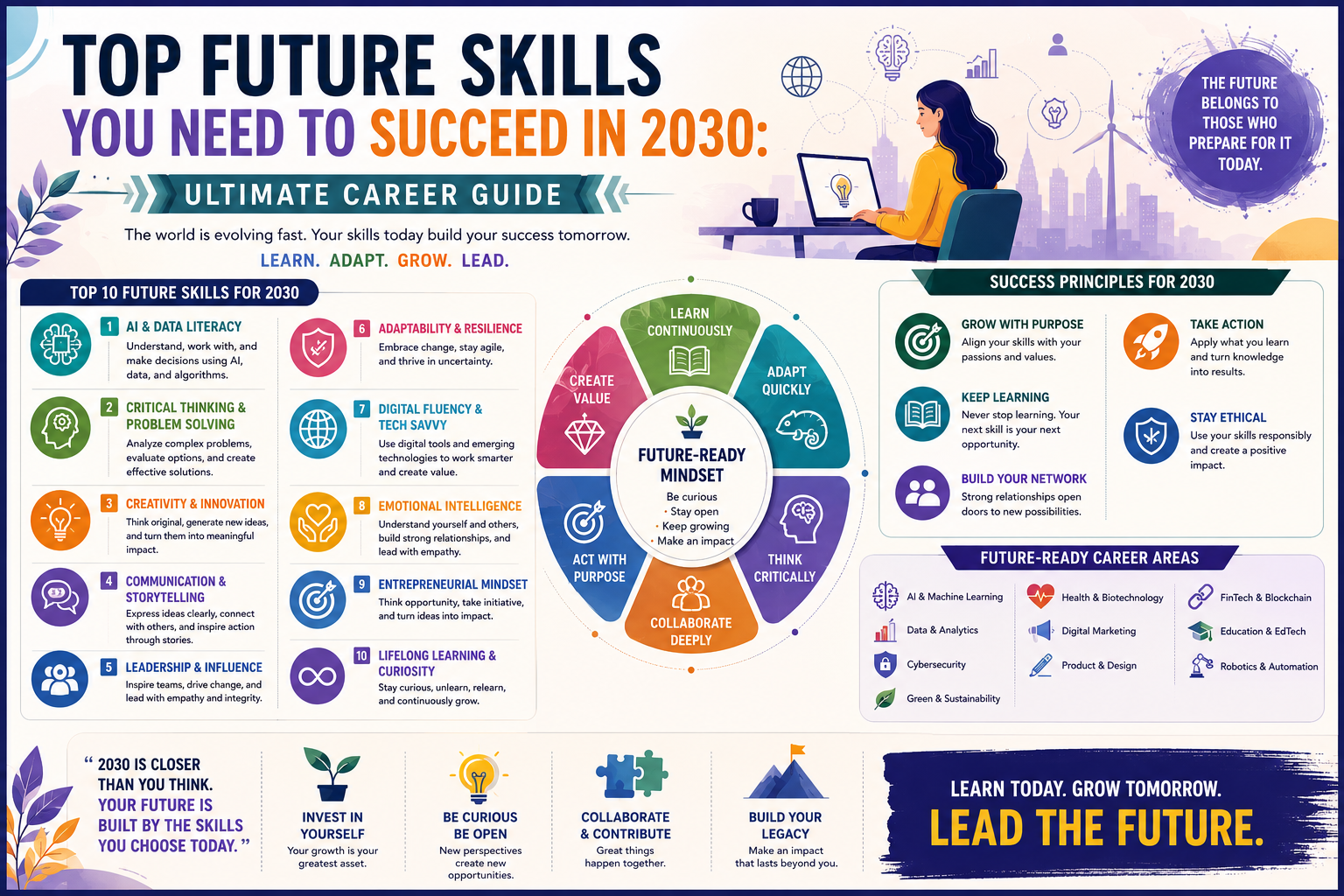
Success is not a one-time event; it is the result of small choices you make every single day. The routines you build during your school and university years do more than just help you pass your next exam. They lay the foundation for your life, helping you develop the future skills and digital skills necessary to land competitive future careers.
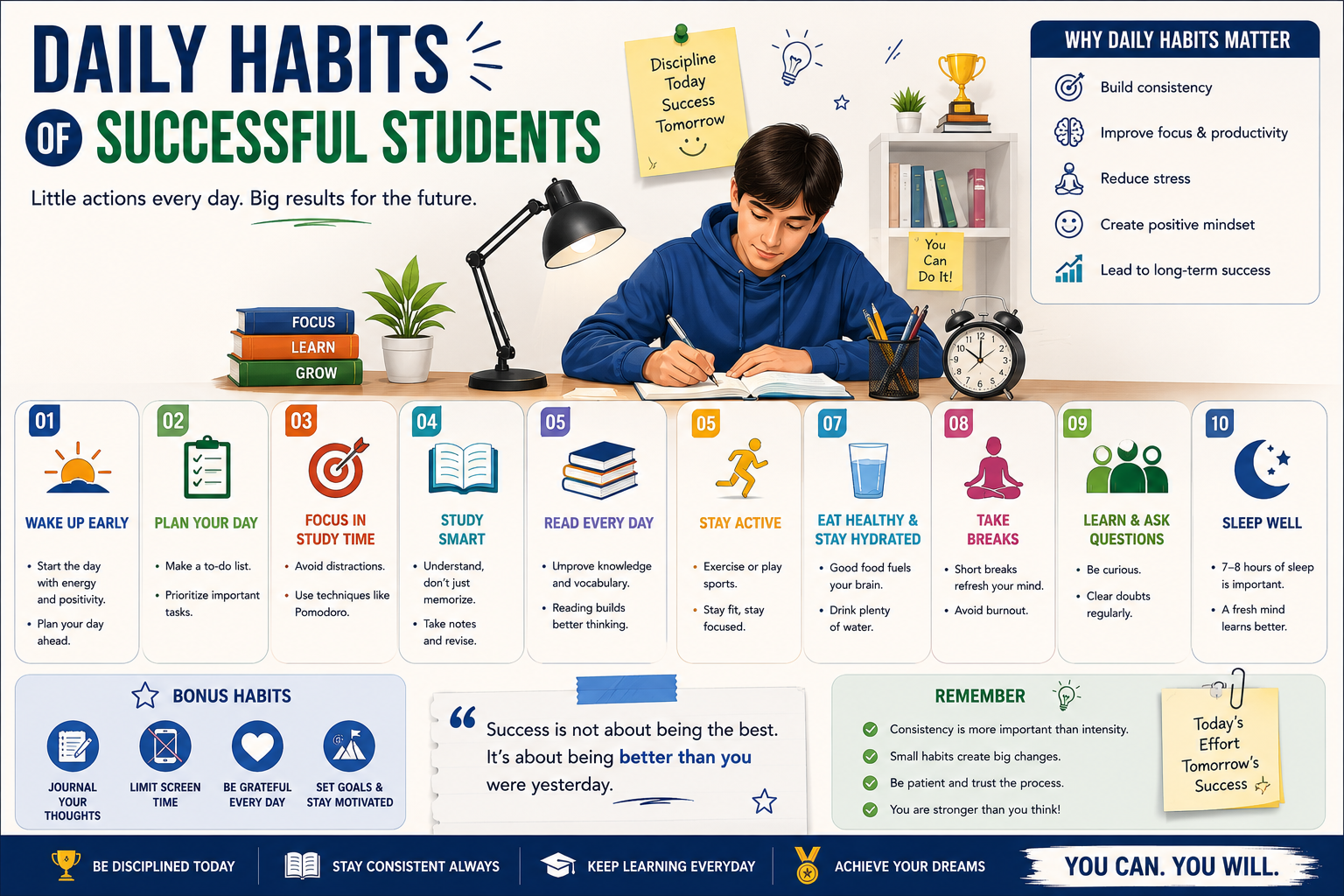
If you want to transform your academic life and prepare yourself to learn lucrative high-income skills, you need to upgrade your daily routine. Here are the essential daily habits of highly successful students, complete with practical examples and actionable tips you can start using today.
1. The Power of a Structured Morning Routine
How you start your day sets the tone for everything that follows. Successful students do not wake up ten minutes before a class, rushing out the door with an empty stomach and a stressed mind. They understand that a calm, intentional morning gives them a mental edge.
Consistent Wake-Up Times
Waking up at the same time every day stabilizes your body’s internal clock. This makes you feel more alert during morning lectures when complex topics are introduced.
- Practical Example: Imagine waking up at 6:30 AM every day. By 8:00 AM, your brain is fully awake, hydrated, and ready to process information. Compare this to waking up at 7:50 AM and spending the first half of your class feeling groggy and distracted.
- Actionable Tip: Move your phone or alarm clock across the room. If you have to physically get out of bed to turn it off, you are much less likely to hit the snooze button.
Reviewing the Daily Game Plan
Before diving into emails or social media, successful students spend five minutes looking at their calendar. They know exactly what classes they have, what assignments are due, and when they plan to study.
2. Advanced Time Management and the Pomodoro Technique
Poor time management is the number one cause of student burnout. High-achieving students do not pull all-night study sessions right before a final exam. Instead, they study in small, highly focused chunks throughout the semester.
The Pomodoro Technique
The human brain can only focus intensely for a limited amount of time before performance drops. To combat this, top students use structured intervals.
- Choose a task (e.g., reading a biology chapter).
- Set a timer for 25 minutes and work with zero distractions.
- Take a 5-minute break to stretch, drink water, or walk around.
- Repeat this cycle four times, then take a longer 20-30 minute break.
- Practical Example: Instead of staring at a textbook for four miserable, distracted hours, a student completes four 25-minute “Pomodoros.” They finish their work in less than two hours because their focus was absolute.
- Actionable Tip: Put your phone in another room or use apps like Forest or Freedom to block social media notifications during your study intervals.
3. Active Learning Over Passive Review
Many students waste hours using study methods that do not work. They highlight entire pages of a textbook or reread their notes over and over. This is called passive learning, and it gives you a false sense of security. Successful students use active recall and spaced repetition.
Active Recall
Active recall forces your brain to retrieve information from memory without looking at your notes. This strengthens the neural pathways in your brain, making the information stick long-term.
- Actionable Tip: Close your textbook after reading a section. Grab a blank piece of paper and write down everything you can remember from memory. Open the book again only to check what you missed.
Teaching Others
The ultimate test of knowledge is whether you can explain a difficult concept to someone else using simple language.
- Practical Example: If you are studying a complex coding language—one of the vital skills for 2030—try explaining how a specific loop works to a classmate, or even to an imaginary audience. If you stumble, you know exactly what area you need to study again.
4. Digital Organization and Smart Note-Taking
We live in a digital world. The papers, binders, and messy notebook pages of the past are being replaced by streamlined digital workspaces. Knowing how to organize information digitally is an essential asset for future careers.
Using Digital Workspaces
Successful students use cloud-based applications to keep their academic and personal lives organized. They don’t lose assignments because everything is backed up automatically.
- Top Tools for Digital Organization:
- Notion or Obsidian: For building a personal knowledge database and keeping clean class notes.
- Google Drive or OneDrive: For organizing essays, presentations, and group projects into clear folders.
- Todoist or Google Calendar: For tracking deadlines, exam dates, and study blocks.
- Actionable Tip: Create a folder for each class this semester. Inside each folder, make a sub-folder named “Exam Review.” Every time you take a great set of notes, copy a summary into that review folder so you aren’t scrambling at the end of the year.
5. Prioritizing Health: Sleep, Nutrition, and Movement
Your brain is a biological organ, not a machine. If you do not take care of your body, your academic performance will eventually plummet. High-performing students treat their bodies like elite athletes treat theirs.
The Non-Negotiable 8 Hours of Sleep
Sleep is when your brain processes and stores the information you learned during the day. Depriving yourself of sleep to study actually makes your brain less effective at remembering things.
- Practical Example: Student A sleeps 4 hours to study all night. Student B sleeps 8 hours and studies for just two hours before bed. Student B will almost always perform better on a conceptual exam because their brain is rested enough to think critically.
- Actionable Tip: Stop looking at digital screens at least 30 minutes before bed. The blue light from your phone fools your brain into thinking it is still daytime, ruining your sleep quality.
Movement Breaks
Physical exercise increases blood flow to the brain, which improves focus, reduces anxiety, and boosts creativity. Even a brisk 15-minute walk between study sessions can clear mental fatigue.
6. Developing a Growth Mindset for Future Careers
The job market is shifting rapidly, and the global economy will look vastly different in the coming decades. To stay competitive, successful students look beyond the classroom. They use their free time to cultivate a growth mindset and acquire modern competencies.
Looking Toward the Horizon
Top students don’t just study to pass their current classes; they pay attention to the trends shaping the world. They know that fields like artificial intelligence, cloud infrastructure, and cybersecurity will define the job landscape. By building continuous learning habits early, they ensure they are ready to learn complex high-income skills down the road.
[The Success Triangle]
       Mindset (Growth & Focus)
        /                  \
       /                    \
 Habits (Routine & Sleep) --- Tools (Digital Workspaces)
- Actionable Tip: Spend one hour every weekend exploring a skill outside your major. Take a free course on data analysis, watch tutorials on public speaking, or learn the basics of digital marketing. This habit of self-directed upskilling is the ultimate safety net for your future.
Conclusion: Small Habits, Massive Results
Becoming a successful student is not about radical changes overnight. It is about making a series of small, daily adjustments to your routine. By waking up intentionally, mastering your time through the Pomodoro technique, choosing active learning over passive highlighting, and keeping your digital life organized, you build an unstoppable momentum.
These habits will help you achieve top grades today, but more importantly, they will transform you into an adaptable, disciplined professional ready to conquer the changing world of tomorrow. Start with just one habit today, master it, and watch your entire life upgrade.
Frequently Asked Questions (FAQs)
Q1: I have been a passive learner for years. How do I transition to active learning without feeling overwhelmed?
A1: Start incredibly small. Don’t try to change how you study for every single class at once. Pick your hardest subject next week, and commit to spending just 10 minutes testing yourself with flashcards or blank-sheet recall instead of highlighting. Once you see how much faster you remember the details, apply it to other subjects.
Q2: What should I do if my friends do not respect my study boundaries?
A2: Communication is key. Let your friends know your schedule ahead of time. Instead of saying, “I can’t hang out because I have to study,” try saying, “I am doing an intense focus block from 2:00 PM to 4:00 PM, but I would love to grab coffee or hang out right after!” This shows them that you value your goals and your friendship.
Q3: How do digital organization skills help me in my future career?
A3: Modern corporate environments rely on remote teamwork, shared cloud folders, and digital project management software. If you already know how to keep your files organized, name documents professionally, and manage your calendar digitally as a student, you will require far less training and stand out immediately to employers.
Q4: Is it ever okay to pull an all-nighter if I am completely desperate?
A4: While almost every student does it at least once, it is highly counterproductive. Driving your brain through an exam on zero sleep severely reduces your logical reasoning and critical thinking skills. It is almost always better to get 5 or 6 hours of sleep so your brain can function, even if you didn’t finish reading the last chapter.
Q5: How can I stay motivated to keep up these daily habits when I am tired?
A5: Don’t rely on motivation; rely on your environment. Motivation comes and goes based on your mood, but habits keep you moving forward automatically. Set up your study space the night before, keep your distractions out of reach, and remind yourself why you are studying—whether it is to land your dream career or to master a valuable new skill.