The year 2030 might sound like it belongs in a science fiction movie, but it is just around the corner. Think back to ten years ago. Jobs like “TikTok Creator,” “AI Prompt Engineer,” and “Cloud Architect” barely existed. Today, they are mainstream, high-paying roles.
By the time we reach 2030, the workplace will look completely different. Artificial intelligence (AI), automation, and remote global teams will change how we work. Some jobs will disappear, but many exciting future careers will take their place.
If you are a student, a beginner, or a young professional, you might be wondering: How do I prepare for a world that changes so fast? What should I learn right now to make sure I am always employable?
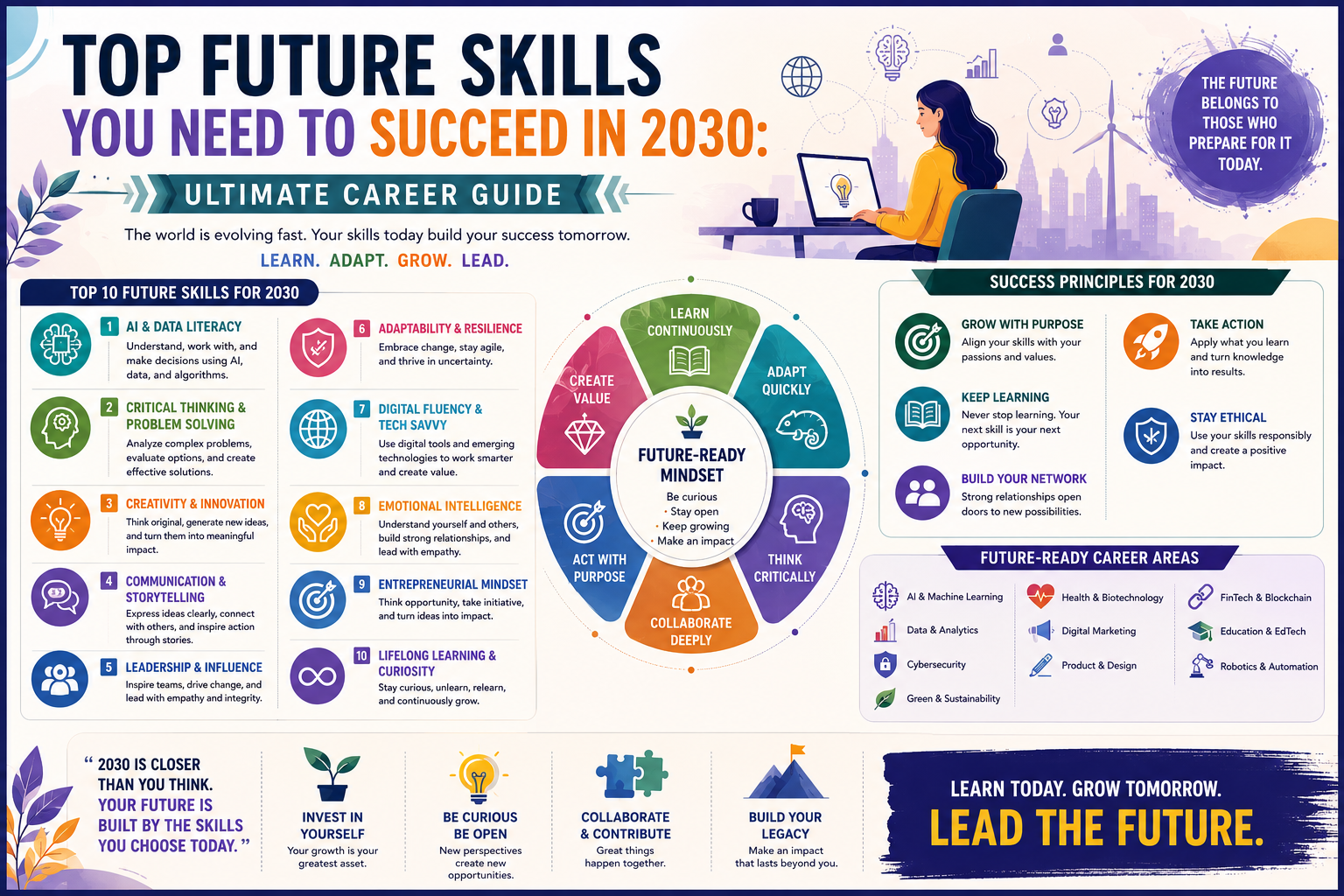
The secret is to focus on future skills. These are a mix of technical digital skills and timeless human abilities that machines cannot easily copy. By mastering these skills for 2030, you can build a stable, successful, and high-paying career.
Let’s dive into the ultimate guide to the skills you need for 2030.
1. Advanced Digital Skills: Co-Piloting with AI
By 2030, simply knowing how to use a computer or check emails won’t be enough. You don’t need to be a math genius or a computer scientist, but you must feel comfortable working alongside smart software.
AI Literacy and Prompt Engineering
AI tools are not going to take all human jobs, but people who know how to use AI will take the jobs of those who don’t. AI literacy means understanding what artificial intelligence can do, what its limits are, and how to talk to it.
- Practical Example: Instead of spending five hours writing a basic marketing report from scratch, a professional in 2030 will use an AI tool to generate the draft in seconds, then spend their time editing, fact-checking, and improving it.
- Actionable Tip: Start playing with generative AI tools like ChatGPT, Claude, or Midjourney today. Practice writing detailed, specific prompts to see how the outputs change.
Data Fluency
Data is the new oil. Every click, purchase, and view generates data. Companies need workers who can look at numbers and understand what they mean for the business.
- Actionable Tip: You don’t need to learn complex coding right away. Start by mastering advanced Microsoft Excel or Google Sheets. Learn how to create simple dashboards and charts using free tools like Google Looker Studio.
2. Elite Cognitive Skills: Thinking Better Than Machines
Computers are great at following instructions and finding patterns in old data. However, they struggle when a problem is completely new, messy, or unexpected. That is where your human brain comes in.
Critical Thinking and Problem-Solving
Critical thinking is the ability to question information, spot biases, and look at a problem from different angles. In a world full of fake news and AI-generated content, being able to find the truth is a superpower.
- Practical Example: If an AI tool suggests a business strategy that looks good on paper but ignores a sudden real-world cultural shift, a human critical thinker will spot the flaw and change the plan.
- Actionable Tip: When you read an article or see a business problem, ask yourself three questions: Who wrote this? What is missing? Why did they choose this solution?
Creative Problem-Solving
Innovation does not happen by following old rules. Creative problem-solving means connecting two completely unrelated ideas to create something brand new.
- Actionable Tip: Read books outside your comfort zone. If you study business, read a book on psychology or art history. Interdisciplinary knowledge is the secret sauce for creativity.
3. High-Income Skills: The Pathways to Wealth
If you want to earn a premium salary in 2030, you need to focus on high-income skills. These are specialized skills that add immediate financial value to a business and cannot be easily automated.
Cybersecurity and Digital Safety
As our entire lives move online, hackers and digital threats are becoming more dangerous. Companies will spend billions of dollars to protect their data, making cybersecurity one of the safest future careers.
- Actionable Tip: Look into free introductory courses on platforms like Coursera or edX for cybersecurity basics. Getting a certified credential here is an excellent investment for beginners.
Technical System Architecture
This involves designing and managing the complex digital clouds where companies store their information.
- Top High-Income Skills for 2030:
- Cloud Computing Infrastructure (AWS, Google Cloud, Azure)
- Blockchain and Smart Contract Development
- Full-Stack System Integration
4. Emotional Intelligence (EQ) and Human Connection
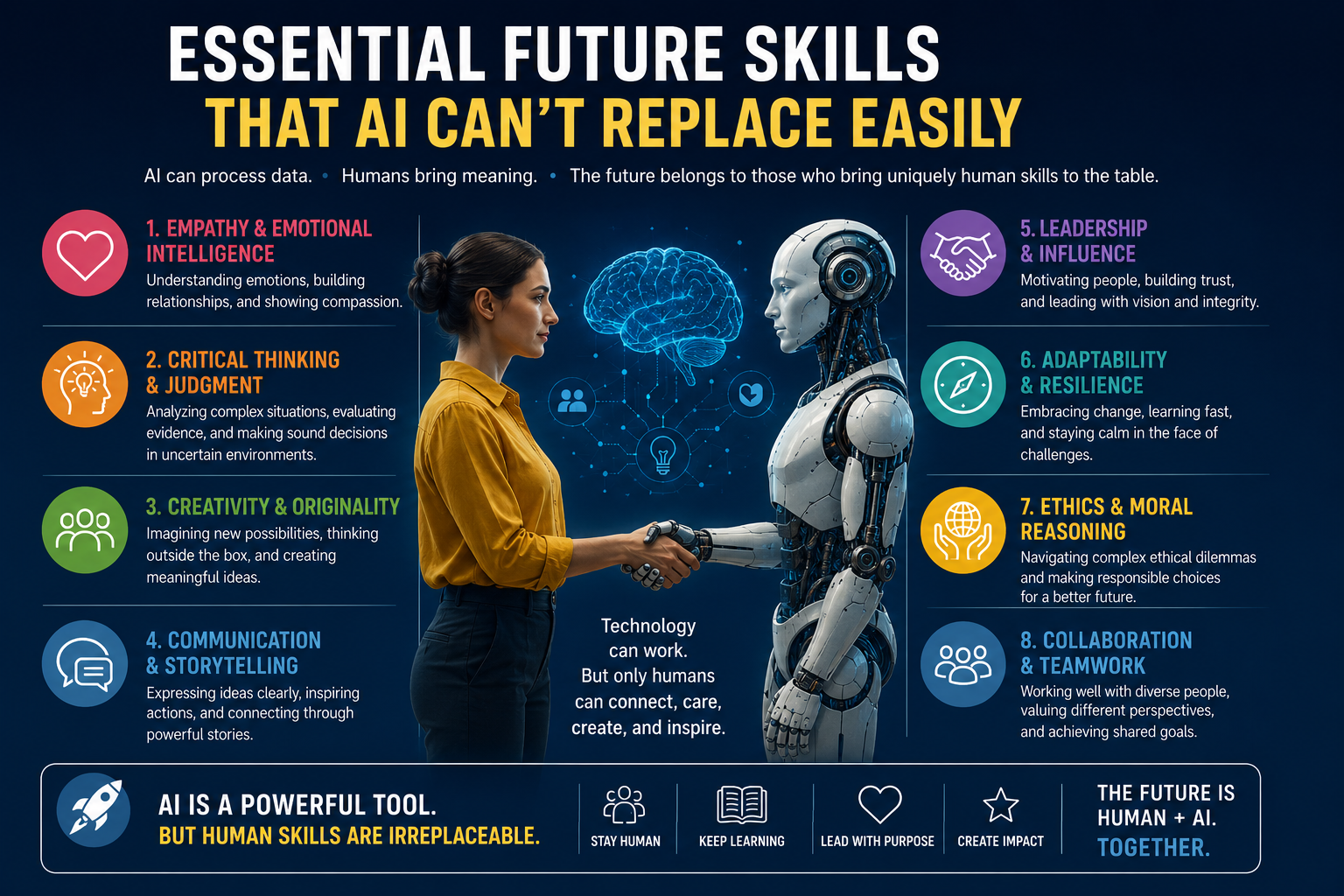
As the workplace becomes more automated, uniquely human skills will become rare and highly valuable. Machines don’t have hearts, egos, or feelings. Humans do.
Adaptive Communication
The future of work is remote and global. You will likely work with teammates from different countries, cultures, and generations. Being able to adapt how you speak, write, and listen is crucial.
- Practical Example: Writing an email to a busy executive requires short, clear bullet points. Explaining the same project to a stressed coworker requires patience and empathy. Doing both well is adaptive communication.
- Actionable Tip: Practice active listening. The next time someone speaks to you, focus entirely on understanding them instead of thinking about what you will say next.
Distributed Leadership and Teamwork
The days of a boss sitting in a corner office shouting orders are fading. In 2030, leadership will be about collaboration, empathy, and helping your remote team do their best work without micromanaging them.
- Actionable Tip: Volunteer to lead group projects at school, university, or local clubs. Learn how to delegate tasks, handle arguments fairly, and keep people motivated.
5. Lifelong Learning: The Ultimate Meta-Skill
The most important skill of all is the ability to learn, unlearn, and relearn. What you learn in college today might be outdated by 2030. To survive, you must become a lifelong learner.
[Your Skills Matrix in 2030]
   ├── Technical Base: AI Literacy + Cloud Skills
   ├── Cognitive Core: Critical Thinking + First-Principles
   └── Human Shell: High EQ + Continuous Adaptability
Cognitive Flexibility
This means being open to change and staying resilient when things don’t go as planned. If your industry changes overnight, you must have the mental agility to accept it and learn a new path without giving up.
- Actionable Tip: Build a “Learning Ritual.” Dedicate just 30 minutes every day to reading an industry blog, taking a micro-course, or learning a new digital tool. Consistency beats intensity every single time.
Conclusion: Build Your Future-Proof Moat
The countdown to 2030 has already begun. You don’t need to fear the future or worry about robots taking over your dreams. The future job market will have plenty of room for ambitious, skilled, and adaptable individuals.
The best strategy is to combine your digital skills with your natural human strengths. Use AI to handle boring, repetitive tasks so you can focus your time on big-picture strategy, creativity, and building real human relationships. By treating your career like a software app that needs regular updates, you will turn the challenges of 2030 into your greatest opportunities.
Frequently Asked Questions (FAQs)
Q1: Will AI replace all entry-level jobs by 2030?
A1: No, AI will not replace all entry-level jobs, but it will change them completely. Instead of doing manual data entry or basic copy pasting, entry-level workers will use AI to do those tasks and spend their time reviewing, polishing, and managing the systems.
Q2: Do I need to learn how to code to succeed in 2030?
A2: Not necessarily. While knowing basic code is helpful, “no-code” and “low-code” tools are making it easy to build software without writing lines of code. It is more important to understand digital logic, system architecture, and how data flows.
Q3: What are the fastest-growing future careers?
A3: The highest growth is happening in renewable green energy engineering, AI software management, cybersecurity defense, healthcare technology, and remote team consulting.
Q4: How can a student practice high-income skills with zero budget?
A4: You don’t need expensive degrees. Platforms like YouTube, Google Career Certificates, Harvard’s free CS50 course, and open-source bootcamps offer world-class education for free. The only cost is your time and dedication.
Q5: What is the biggest mistake young professionals make when preparing for the future?
A5: The biggest mistake is assuming their education ends when they graduate. Assuming a single degree will sustain a 40-year career is a risky strategy. The most successful professionals are those who constantly upskill.