There was a time when watching your favorite TV show was simple. You turned on your television, flipped to a specific channel at 8:00 PM, and sat through commercial breaks. Today, cable TV is largely a relic of the past. It has been replaced by an endless landscape of digital streaming services.
However, this digital revolution has created a brand-new problem: subscription fatigue. With dozens of platforms fighting for your attention and money, subscribing to all of them can easily cost more than an old cable package. Every service claims to have the best movies, the most exclusive shows, and the sleekest user interface.
For students, beginners, and young professionals, managing your monthly budget while staying entertained requires a strategic approach. Interestingly, the technology powering these media giants—ranging from data-driven content algorithms to global content delivery networks—is rapidly shifting the job market.
Understanding digital distribution, user behavior metrics, and online community building are essential modern digital skills. As video consumption grows globally, mastering the mechanics behind streaming, cloud infrastructure, and data analytics are recognized as highly versatile high-income skills. Keeping an eye on how these platforms evolve can give you a unique edge when preparing for future careers and building vital skills for 2030.
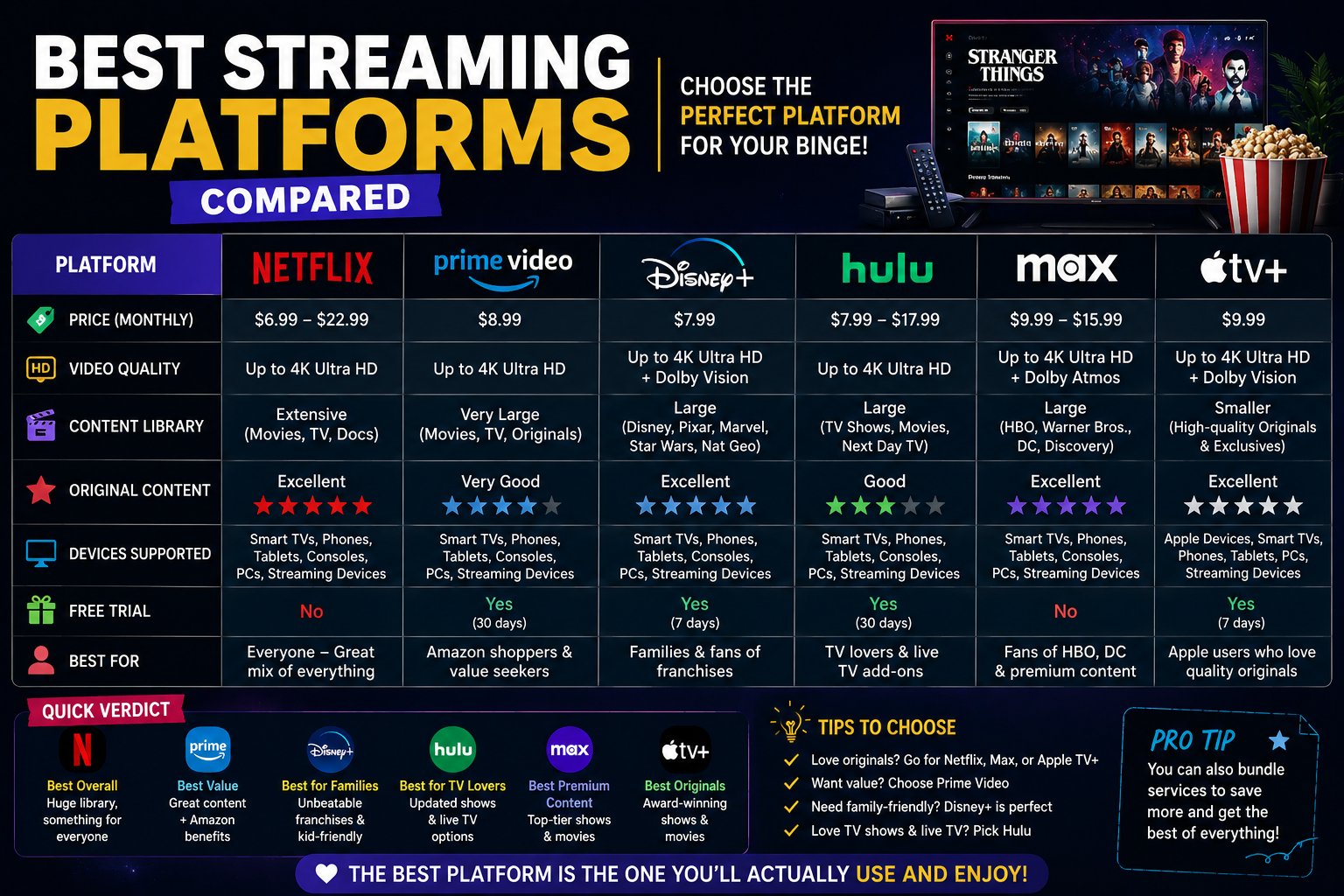
Let’s take a detailed, objective look at the best streaming platforms compared side-by-side to find out which ones genuinely deserve your hard-earned cash.
1. Netflix: The Undisputed King of Variety and Original Content
Netflix is the pioneer that started the streaming revolution. It remains the largest and most influential video platform in the world, known for its massive content library and industry-leading user experience.
The Content Library
Netflix relies heavily on its massive budget for original productions, known as Netflix Originals. From viral sensations like Squid Game and Stranger Things to critically acclaimed international cinema, there is always something new to watch. It is also an exceptional platform for deep, analytical documentaries.
Pricing and Features
- Standard with Ads: A budget-friendly option for students looking to save money.
- Standard (No Ads): Allows streaming on two screens simultaneously in Full HD quality.
- Premium: Offers pristine 4K Ultra HD streaming on up to four screens at the same time.
- Pros: The best user interface in the industry, highly accurate recommendation algorithms, and an unmatched collection of international foreign language films.
- Cons: Premium tiers are becoming increasingly expensive, and the platform has implemented strict rules against password sharing outside of a single household.
2. Amazon Prime Video: The Ultimate Budget-Friendly Value Package
Amazon Prime Video takes a completely different business approach than its competitors. It isn’t just a standalone entertainment service; it is a built-in perk of a broader Amazon Prime ecosystem subscription.
The Content Library
While Prime Video has a slightly more disorganized library layout than Netflix, it features heavy-hitting, high-budget original series like The Lord of the Rings: The Rings of Power, The Boys, and Reacher. Furthermore, it includes a massive catalog of classic Hollywood movies and independent cult hits.
The True Hidden Value
The major reason Prime Video stands out for young professionals and beginners is the sheer volume of extra perks bundled into the subscription cost.
- What You Get with an Amazon Prime Membership:
- Full access to the entire Prime Video streaming catalog.
- Free, expedited shipping on millions of items purchased through Amazon.
- Access to Prime Music for ad-free music streaming.
- Free kindle e-books and unlimited cloud photo storage space.
- Actionable Tip: If you are a college or university student with a valid school email address, you can sign up for the “Prime Student” tier. This gives you an extended free trial period followed by a massive 50% discount on the standard subscription price.
3. Disney+: The Capital of Nostalgia, Franchise IP, and Fandoms
If you grew up watching animated classics, or if you are a massive fan of superhero blockbusters and space operas, Disney+ is an essential platform for your household.
The Content Library
Disney+ controls some of the most valuable intellectual properties (IP) in human history. The service is the exclusive streaming home for:
- The entire catalog of classic and modern Disney animated movies.
- The complete Marvel Cinematic Universe (MCU) franchise.
- The vast Star Wars universe, including exclusive hit spin-off shows like The Mandalorian.
- The award-winning nature and science documentaries produced by National Geographic.
- The full catalog of Pixar animation studio films.
- Pros: Perfect for families and franchise fans, high-quality 4K streaming is included in the standard tiers without forcing you to pay for an expensive top-tier plan.
- Cons: If you don’t care about superheroes, Star Wars, or animated childhood classics, the library can feel incredibly narrow and limited compared to Netflix.
4. Max (Formerly HBO Max): The Gold Standard for Prestige Drama
Max is the premium platform built for viewers who prefer high-quality, cinematic prestige television over casual reality shows or cheap background noise content.
The Content Library
Max houses the legendary history of HBO production. This means you get access to some of the highest-rated television dramas ever recorded, including Game of Thrones, House of the Dragon, Succession, The Last of Us, and The Wire. It also includes the massive movie library owned by Warner Bros., featuring the DC Universe superhero movies and the Harry Potter franchise.
- Why It Matters for Creative Professionals: Studying the complex narrative structures and deep character writing found on Max is an excellent way to train your mind in advanced digital storytelling. Creative writing and digital asset management are highly transferable future skills needed to command attention online as we look toward skills for 2030.
- Pros: Unmatched, award-winning storytelling quality; movies transition from movie theaters to the app very quickly.
- Cons: The platform’s subscription pricing is on the higher end of the market, and its mobile app interface can occasionally feel buggy compared to Netflix.
5. Summary Comparison Matrix: Finding Your Perfect Match
To help you make a fast, data-backed decision for your monthly budget, let’s look at how the top four networks stack up side-by-side based on their core strengths.
| Platform | Best For | Core Advantage | Price Point |
| Netflix | Overall Variety | Best-in-class app performance and massive global international library | Premium / High |
| Amazon Prime | Budget Value | Bundled with free shipping, shopping deals, and music streaming | Economical / Student Deals |
| Disney+ | Franchise Fans | Exclusive home for Marvel, Star Wars, and nostalgic childhood animation | Moderate |
| Max | Prestige Drama | Cinema-quality television writing, complex stories, and hit movies | Premium / High |
Conclusion: Tailor Your Streaming to Your Lifestyle
There is no single “perfect” platform that fits every single person. The best streaming service depends entirely on your personal tastes, your viewing habits, and your current financial goals.
If you want the maximum variety of content and watch a lot of international content, Netflix remains the safest bet. If you are an absolute beginner on a tight budget who shops online frequently, Amazon Prime Video offers unbeatable daily utility. If you are a fan of massive cinematic franchises, pick Disney+, and if you value elite television writing above everything else, invest your money into Max.
Instead of subscribing to all of them at once, practice a strategy called “subscription cycling.” Subscribe to one platform for a month, watch all the shows you are interested in, cancel your subscription, and move to a different service the following month. This simple habit keeps your media content fresh while protecting your wallet.
Frequently Asked Questions (FAQs)
Q1: What is “Subscription Cycling,” and how does it save money?
A1: Subscription cycling is the practice of only paying for one streaming service at a time. Because none of the major streaming networks require long-term contracts, you can cancel your plan at any time without a penalty fee. By signing up for Netflix in January, switching to Max in February, and moving to Disney+ in March, you get access to all the top shows throughout the year while only paying a single monthly fee.
Q2: Does streaming in 4K resolution use significantly more internet data?
A2: Yes, absolutely. Streaming video in 4K Ultra HD resolution consumes roughly 7 gigabytes (GB) of data per hour, compared to just 1 to 3 GB per hour for standard High Definition (HD). If your home internet or mobile data plan has a strict monthly data cap, you should manually adjust your app settings to stream in standard HD to avoid massive overage charges.
Q3: Why do different countries have different movies available on the exact same streaming app?
A3: This is due to regional licensing and copyright distribution laws. Film studios sell the distribution rights for movies country-by-country. If a rival local TV network or media company already owns the exclusive rights to a movie in your specific country, your streaming platform is legally blocked from showing it to you until that contract expires.
Q4: Are there any completely free streaming platforms that are legal to use?
A4: Yes! There is a growing category of platforms called FAST (Free Ad-supported Streaming Television). Excellent, 100% legal examples include Tubi, Pluto TV, and Freevee. These apps do not charge a monthly subscription fee, but they will require you to watch occasional commercial ad breaks throughout the movie, similar to traditional cable television.
Q5: How do streaming platforms use machine learning to suggest new content?
A5: Streaming platforms employ data tracking systems to monitor your behavior. They track what genres you click on, what time of day you watch, how quickly you binge-watch a series, and even the exact moment you hit the pause button. Their algorithms compare your history against millions of other users with similar tastes to predict exactly what show will keep you watching longest.