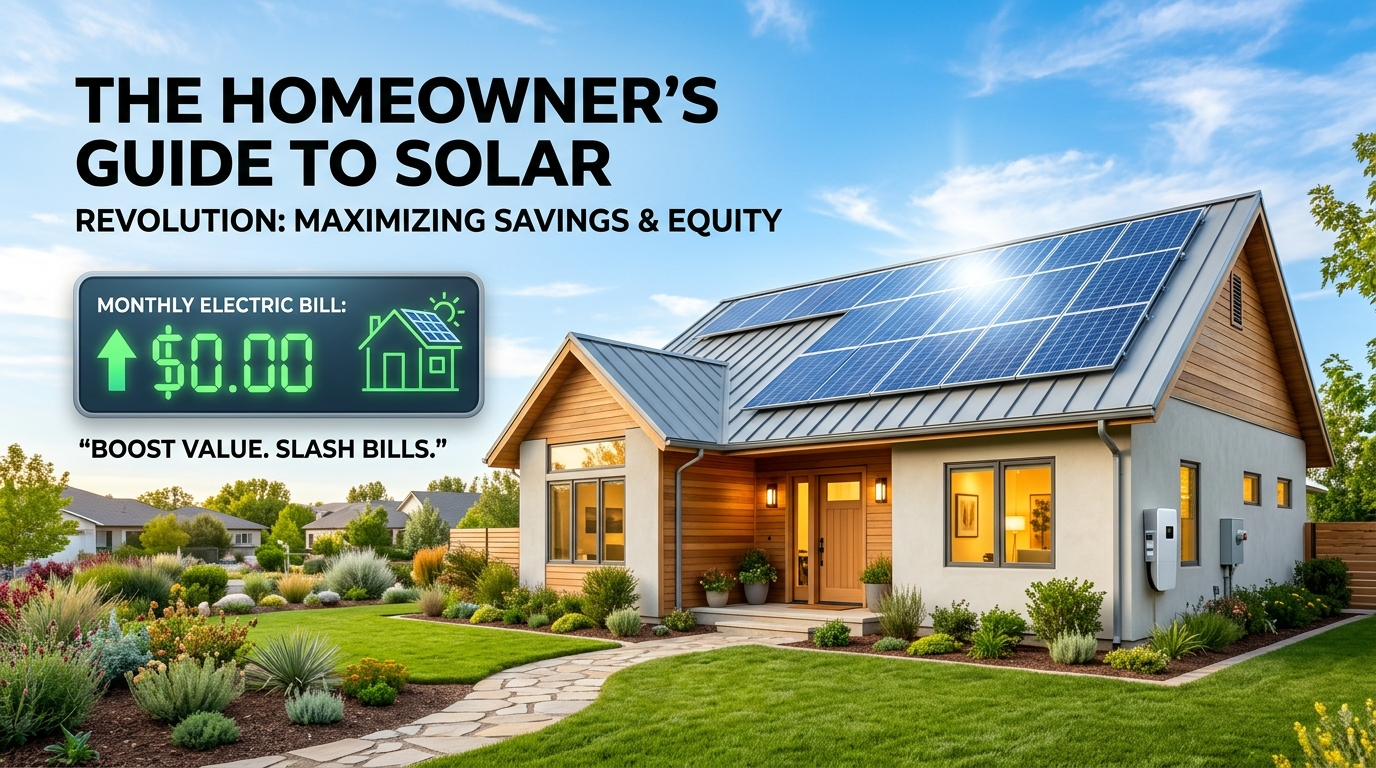
Imagine opening your monthly electric bill, taking a quick glance, and seeing a grand total of $0.00.
Infact, imagine a scenario where the utility company actually owes you money at the end of the month.
For millions of homeowners, this isn’t adistant dream—it’s an everyday reality thanks to modern residential solar energy systems. As home improvement projects go, fewupgrades offer the rare double-benefit of instant monthly cash savings and a massive boost to your home’s resale value.
If you’ve been on the fence about installing solar panels, upgrading your power storage, or making your home more energy-independent, 2026 is the single best time to take action. In this comprehensive guide, we’ll break down why home solar is the ultimate home improvement investment, how to calculate your potential savings, and step-by-step instructions for getting started today.
Why Home Solar Is the Ultimate Home Improvement Project
When thinking about high-ROI home upgrades, most homeowners default to kitchen remodels, hardwood floor refinishing, or building a back deck. While those projects add cosmetic appeal, they all have one major drawback: they don’t pay you back every single month.
Home solar is unique because it shifts your household from an energy consumer to an energy producer. Here is why solar stands at the top of the home improvement hierarchy:
1. Instant & Long-Term Financial Return
Utility rates across the country continue to rise year after year. Installing a solar panel system effectively lets you lock in your power costs at a predictable rate for 25 to 30 years. Instead of sending hundreds of dollars to your local utility company each month, that money stays in your pocket—or goes toward paying off an asset that adds permanent value to your property.
2. Significant Increase in Home Equity
According to home real estate market data, homes equipped with modern solar power systems sell for an average of 4.1% more than comparable homes without solar. Additionally, homes with solar often sell significantly faster because buyers actively seek out energy-efficient properties with low operational costs.
3. Energy Security & Grid Independence
Extreme weather events, grid overloads, and unexpected power outages have made energy security a top priority for modern families. By pairing your rooftop solar array with an advanced smart battery storage system, your home stays fully powered even when the neighborhood goes dark.
4. Environmental Impact Without Compromise
Going solar allows you to dramatically reduce your household’s carbon footprint without sacrificing comfort. A typical residential solar installation offsets several tons of carbon emissions annually—the equivalent of planting hundreds of trees every single year.
How Residential Solar Works: A Simple Breakdown
Many homeowners avoid making the switch simply because they think the technical side is overly complicated. In reality, modern home solar systems are designed for simple, hands-off operation:
- Solar Panels (PV Array): Installed on your roof or ground mount, solar panels capture sunlight and convert it into direct current (DC) electricity.
- Inverter System: A high-efficiency string inverter or microinverters turn that DC power into alternating current (AC) electricity—the exact standard type of electricity your appliances, lights, and HVAC systems use.
- Smart Net Metering / Battery Storage: Any excess power your home generates during sunny hours is either stored in your local home battery or fed back into the local electric grid via Net Metering, earning you valuable bill credits.
- Energy Monitoring App: Track your real-time power generation, household consumption, and total savings directly from your smartphone.
Step-by-Step: Planning Your Home Solar Upgrade
Ready to transform your roof into a clean energy powerhouse? Follow this simple step-by-step roadmap to maximize your investment and ensure a seamless installation.
Step 1: Evaluate Your Roof & Energy Usage
Before diving into quotes, review your last 12 months of electric bills to get an accurate estimate of your average annual kilowatt-hour (kWh) consumption. Next, inspect your roof’s condition:
- Orientation: South- and west-facing roofs receive the highest amount of direct sunlight throughout the day.
- Shading: Check for overhanging trees or architectural obstructions that might shade your roof during peak sunlight hours.
- Roof Age: If your roof is over 15–20 years old, consider replacing or repairing shingles prior to panel installation so you won’t have to detach panels for roof work later.
Step 2: Calculate Federal, State, and Local Incentives
Financial incentives make home solar dramatically more affordable. Depending on your location, you can take advantage of:
- Government Tax Credits: Tax credits allow you to deduct a substantial percentage of your total solar installation cost directly from your federal taxes.
- State & Local Rebates: Many state energy offices and local municipalities offer cash-back incentives or solar renewable energy certificates (SRECs).
- Property Tax Exemptions: In many states, the value added to your home by a solar system is completely exempt from property tax increases.
Step 3: Get a Custom Solar Savings Quote Online
You don’t need to invite high-pressure salespeople into your living room to find out what solar will cost for your specific roof. Modern solar platforms use satellite technology to map your roof geometry, analyze sun exposure, and give you an accurate side-by-side comparison of costs versus savings.
💡 Ready to see how much you could save on your monthly power bill?
Use our recommended [Free Home Solar Savings Calculator / Top Solar Provider Link] to get an instant, personalized solar estimate tailored specifically to your home zip code and current energy usage in less than two minutes!
Solar Financing Options: Choosing What’s Right for You
When upgrading your home with solar energy, you have flexible options for funding the project:
| Financing Option | Ownership | Upfront Cost | Key Benefit |
|---|---|---|---|
| Cash Purchase | You own the system | Highest | Maximum long-term ROI and immediate asset ownership |
| Solar Loan | You own the system | Low to $0 Down | Own the system with low monthly payments often lower than your old power bill |
| Solar Lease / PPA | Third-party owns | $0 Down | Fixed lower monthly energy rate with maintenance included |
For most homeowners looking to maximize home equity and take full advantage of government tax credits, a Solar Loan or Direct Purchase provides the absolute highest overall financial return over the lifespan of the equipment.
Crucial Questions to Ask Solar Installers
When reviewing quotes from top solar companies, make sure to ask these essential questions before signing any contract:
- What is the linear performance warranty on the panels? (Look for a minimum 25-year performance warranty guaranteeing 80%+ efficiency after 25 years.)
- Are microinverters or power optimizers included? (Individual panel optimizers ensure that shade on one panel doesn’t lower the power output of the whole system.)
- Does the quote include all permitting, utility interconnect fees, and inspection costs?
- How does your company handle warranty claims and system monitoring?
Final Verdict: Is Home Solar Worth It in 2026?
With rising utility costs, generous tax incentives, and modern battery storage technologies, home solar remains one of the smartest, highest-value home improvement investments available today. It increases your independence, protects your household budget against inflation, and adds real equity to your property.
Don’t let another summer heatwave or winter freeze drive up your electric bill unnecessarily. Take the first step toward clean, self-produced energy today.
👉 Click Here to Get Your Free, No-Obligation Solar Quote & Estimate Your Monthly Savings Today!
Disclaimer: Solar incentives, tax credits, and savings vary based on state laws, utility providers, roof angle, and individual tax situations. Be sure to consult with a qualified tax professional and licensed solar installer for an accurate evaluation of your home.